
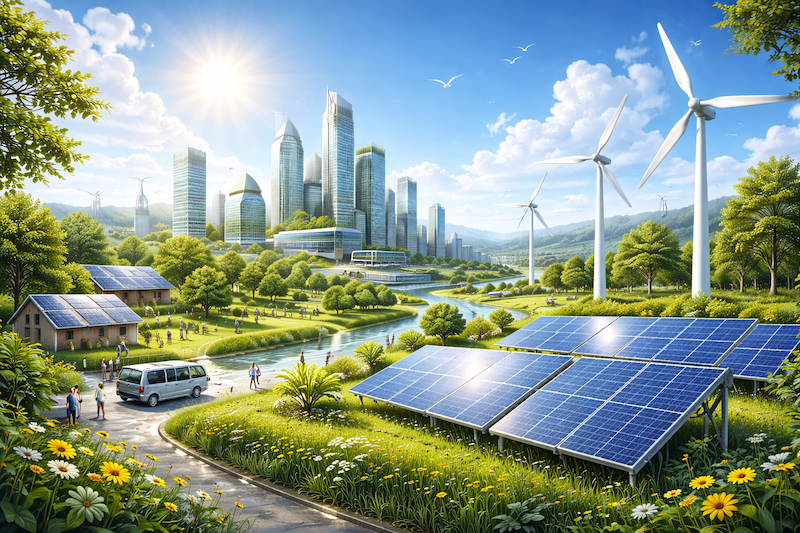
A zero carbon economy is an economic system designed to operate without releasing net carbon dioxide emissions into the atmosphere. It represents a fundamental shift away from fossil fuel dependence toward cleaner, more sustainable ways of producing energy, goods, and services. As climate concerns intensify, the concept of a zero carbon economy has become central to long-term environmental and economic planning.
This article explains what a zero carbon economy is, how it differs from traditional economic models, and why it plays a crucial role in shaping a sustainable future.
Defining a Zero Carbon Economy
A zero carbon economy aims to balance carbon emissions with carbon removal.
In practice, this means:
- drastically reducing greenhouse gas emissions
- replacing fossil fuels with clean energy
- offsetting unavoidable emissions through carbon removal
The goal is not zero activity, but zero net emissions.
Zero Carbon vs. Carbon Neutral
The two terms are closely related but not identical.
- Carbon neutral often allows ongoing emissions offset by credits
- Zero carbon emphasizes eliminating emissions at the source
A zero carbon economy prioritizes prevention rather than compensation.
Why Is a Zero Carbon Economy Necessary?
Climate change is driven primarily by carbon emissions.
Environmental Urgency
Rising global temperatures contribute to:
- extreme weather events
- sea level rise
- ecosystem disruption
A zero carbon economy addresses the root cause by reducing emissions across all sectors.
Economic and Social Stability
Unchecked climate change can:
- disrupt supply chains
- increase resource scarcity
- threaten livelihoods
Transitioning early helps reduce long-term economic risks.
Key Pillars of a Zero Carbon Economy
Clean Energy Systems
Energy production is the largest source of emissions.
A zero carbon economy relies on:
- solar and wind power
- hydropower and geothermal energy
- energy storage and smart grids
Clean energy forms the foundation of the transition.
Electrification of Transport and Industry
Replacing fossil fuels with electricity:
- lowers emissions
- increases efficiency
- supports renewable integration
Electric vehicles and electrified industrial processes are central components.
Energy Efficiency
Using less energy achieves immediate benefits.
Efficiency improvements include:
- better building insulation
- efficient appliances
- optimized industrial processes
Efficiency reduces both emissions and costs.
Circular and Low-Carbon Production
Traditional production models generate waste and emissions.
A zero carbon economy promotes:
- material reuse
- recycling and remanufacturing
- low-carbon materials
This reduces resource extraction and environmental impact.
The Role of Innovation
Innovation accelerates the transition.
Technological Advancements
Key innovations include:
- carbon capture and storage
- advanced batteries
- green hydrogen
These technologies help decarbonize hard-to-abate sectors.
System-Level Innovation
Beyond technology, change is needed in:
- business models
- infrastructure design
- regulatory frameworks
This is where Driving Effective and Sustainable Innovations becomes essential for aligning progress with long-term environmental goals.
Economic Transformation and Job Creation
A zero carbon economy reshapes the labor market.
New Industries and Opportunities
Growth areas include:
- renewable energy installation
- energy-efficient construction
- environmental services
These sectors can generate millions of new jobs.
Workforce Transition
Supporting workers requires:
- reskilling programs
- education and training
- social safety nets
A just transition ensures no one is left behind.
Policy and Governance
Government action plays a critical role.
Regulation and Incentives
Effective policies include:
- emissions standards
- carbon pricing mechanisms
- incentives for clean investment
Clear policy signals encourage long-term planning.
International Cooperation
Climate change is a global challenge.
Cooperation enables:
- shared innovation
- aligned targets
- coordinated action
Global collaboration strengthens outcomes.
Business and Corporate Responsibility
Businesses are key drivers of emissions and solutions.
Corporate Decarbonization Strategies
Companies can reduce emissions by:
- switching to renewable energy
- redesigning supply chains
- improving transparency
Sustainability increasingly influences competitiveness.
Investment and Finance
Financial systems are shifting toward:
- green investments
- climate risk assessment
- sustainable financing
Capital allocation shapes the pace of transition.
Challenges in Building a Zero Carbon Economy
The transition is complex.
Infrastructure and Cost Barriers
Challenges include:
- aging energy infrastructure
- high upfront investment costs
- uneven access to technology
Long-term benefits often outweigh short-term costs.
Behavioral and Cultural Change
Technology alone is not enough.
Lasting change requires:
- shifts in consumption habits
- public engagement
- acceptance of new systems
Culture influences economic outcomes.
Common Misconceptions
- a zero carbon economy means no growth
- it is unrealistic or unattainable
- it requires major sacrifices
In reality, it emphasizes smarter growth and innovation.
The Timeline for Transition
The transition will not happen overnight.
Expected progression:
- short-term emission reductions
- medium-term system transformation
- long-term stabilization
Early action reduces long-term disruption.
Benefits Beyond Climate
A zero carbon economy delivers multiple advantages.
Health and Quality of Life
Reduced pollution leads to:
- cleaner air
- fewer health risks
- more livable cities
Environmental benefits directly impact well-being.
Resilience and Energy Security
Diversified energy systems:
- reduce dependence on imports
- stabilize prices
- improve resilience to shocks
Sustainability strengthens security.
Preparing for a Zero Carbon Future
Preparation involves:
- education and awareness
- strategic planning
- collaboration across sectors
Understanding the transition is the first step.
Summary
A zero carbon economy is an economic system designed to eliminate net carbon emissions by transforming energy, industry, transport, and consumption. It prioritizes emission reduction at the source, supported by innovation, policy, and collaboration. While challenges remain, the transition offers opportunities for economic resilience, job creation, improved health, and environmental protection. By embracing sustainable innovation and long-term thinking, a zero carbon economy provides a realistic and necessary path toward a stable and prosperous future.